
December 7.
The day that will live in infamy.
The impact of this date is heavy on my existence. This single day has defined who I am and where I came from, decades before my existence. It’s an important story, even as one leg of my family sits on the western side of the Atlantic and the other leg on the eastern side.
Between the World Wars, the US was determined to stay out of the affairs of Europe and Asia. My grandfather had been sent home to Nebraska from his post at Pearl Harbor to await discharge papers.
I wonder what he was doing on December 7, 1941 when sleepy America was abruptly awakened by the horrors of the news of the bomb.
Was he hanging out at the local Co-Op? Or was he working cattle or doing other farm chores? It’s doubtful he would have wasted a day of work to flirt with the local girls, even on his leave.
Unlike my generation’s day of infamy, there was not instant reporting. He probably never knew exactly where he was when the bomb dropped. When his friends were buried by shrapnel and ocean waves. He was likely glad he did not have the paralyzing minute-by-minute play of the day.
He had work to do. The activities from thousands of miles away didn’t change that.
Yet he also knew that the message following the news would not be the discharge papers he waited for. He packed his bags and returned to Hawaii en route to Europe to engage in the war.
On the other side of my family, on the other side of the world, and the other side of the war, my grandmother was a teenager in Germany. Some of her family had been called into war as well. Some were drafted into the Nazi army and others were decorated soldiers serving as gestapos in the SS.
But not everything was as it seemed.
A few years ago Oma went to Kailie’s class to talk about WW2. She repeated over and over again in her thick German accent, “The Jews were just people like you and me. They were the same as us.”
They didn’t just BELIEVE this, they LIVED it.
Although they knew it could cost them everything, they lived a double life. Sons served in the army. The family received awards for being “good German citizens” all the while hiding Jewish and Mormon families in the cellar. Oma learned early the necessity of keeping quiet. The constancy of fear crept into her veins in these early years and never disappeared. This was the cost of doing right. She bore these burdens the rest of her life.
My grandfather and great grandparents were heroes.
Their lives were marked by bravery and love for others. The legacy they’ve left informs who we are and where we come from.
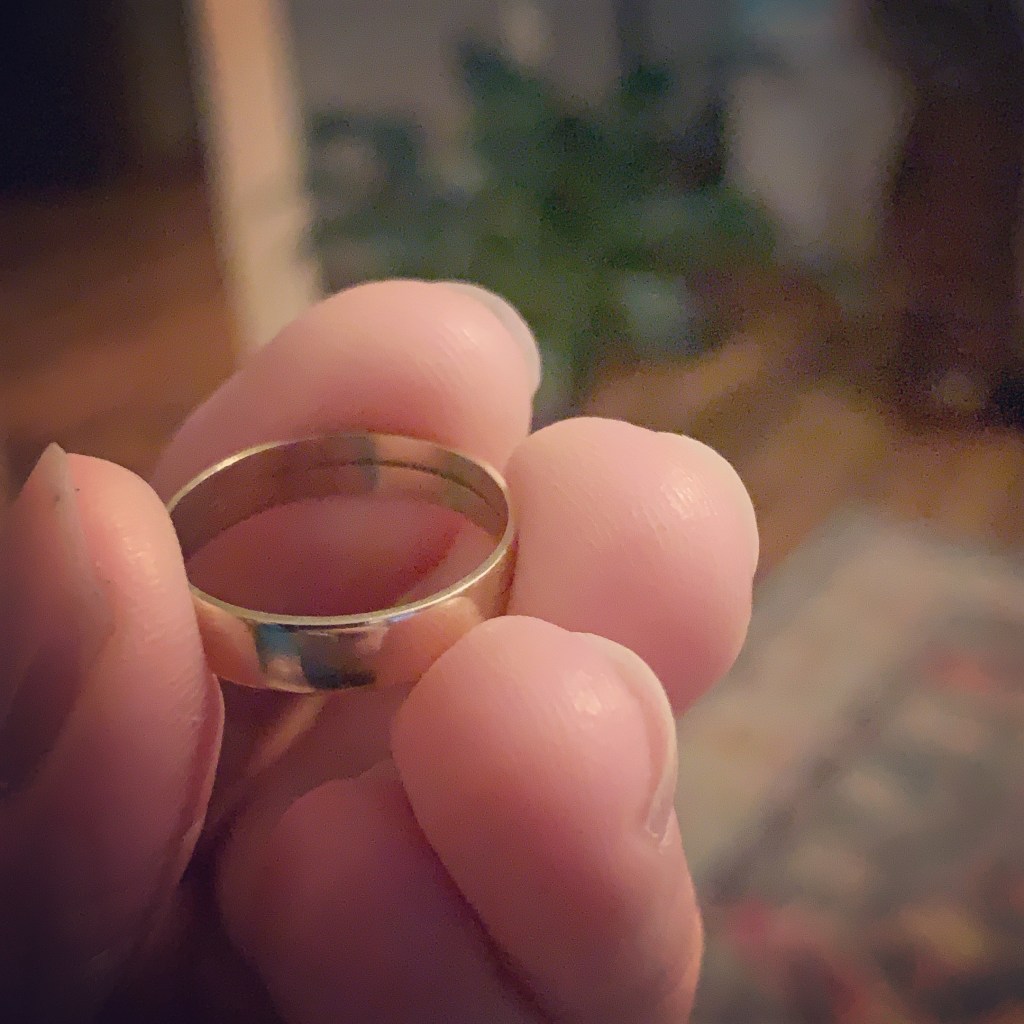
Yet it’s our decision on a daily basis if it’s who we want to continue to be. As my Oma lay dying, the ring she continued to wear was not her wedding ring but this simple golden band. Her parents’ rings soldered together as one was one of her most prized possessions. There was hardly anything I took from her estate, but I begged my mom for this ring.
It serves as a reminder of the images of discarded golden wedding bands from Jewish prisoners, tossed into bins as they marched into the death camps. What fortune my great-grandparents had to escape their neighbors’ same fates.
This ring is a symbol of bravery, integrity and courage. It represents the beckon to do what is right even when it is hard, even when it may cost everything.
No matter your family’s history on this fateful day, I hope this date always reminds you to stand up for what is right, to fight for those who can’t fight for themselves, to protect the innocent, and to have courage in these things, no matter the cost.
 Savannah Lyon
Leave a comment